HSE OBJECTIVES - Sample


HSE OBJECTIVES - Sample

RESPIRATORY PROTECTION – Definition of Terms


Formation of objectives and targets is very important for the success of environmental health and safety management system for any industry.

Different company’s adopt approaches that suite their needs and organizational structure.

An HSE aim arising from a policy or standard that the organization sets it self to achieve and which is measured . A detailed performance requirement, quantified, applicable to the organization or parts thereof, that arises from the HSE objectives and that needs to be set in order to achieve those objectives.

But ultimate goal is to achieve best results to safe guard employees and save some money that goes in different forms of penalties or lost working hours.

Objectives and targets are always cascaded with the HSE policy and vision of any company.

Use of Explosives & Safety Measures

Here we can see some sample objective in HSE,

1. Health

Psychical and physical health of all

Occupational health for all employees

Health care / protection

Health awareness

Training and education to employees

2. Safety

Accident / incident prevention

Safety working environment(infrastructure)

Personal protective equipment

Safety awareness

Hazard Identification and Risk assessment

Internal / external audits(control measures)

Cargo stowage, securing and handling

Training and education of personal

Management review

Emergency Response Management

Heat Stress

3. Environment

Pollution prevention

Possible compliance with all relevant rules and regulations

Possible reduction of emission

Environmental awareness

Training and education of personal


Chemicals Hazards, Storage & Protection


HAZARD IN SCAFFOLDING ACTIVITIES


HAZARD IN SCAFFOLDING ACTIVITIES

Definitions of Terms in Chemical Safety


Hazards

Fall of persons

Fall of materials

Fall of tools

Failure of the scaffold due to overloading

Failure of the scaffold members during erection and dismantling

Contact with energized power lines

Hazards due to natural calamities

Collateral Hazards

Simultaneous work

Ergonomic Safety – Part 2

Issues

Erecting and dismantling scaffolds

Climbing up and down scaffolds

Planks sliding off or breaking

Improper loading or overloading

Platforms not fully planked or “decked”

Platforms without guardrails

Failure to install all required components such as base plates, connections, and braces

Moving rolling scaffolds in the vicinity of overhead electrical wires

Ventilation Requirements for Confined Space

Training and information to employees

Before employees begin work, they must be informed by their supervisor of:

Hazards employees may be exposed to while at work;

Hazards employees may create which could harm other people;

How to minimize the likelihood of these hazards becoming a source of harm to themselves and others;

The location of safety equipment; and Emergency procedures.


Steam Hazards and Safety Requirements


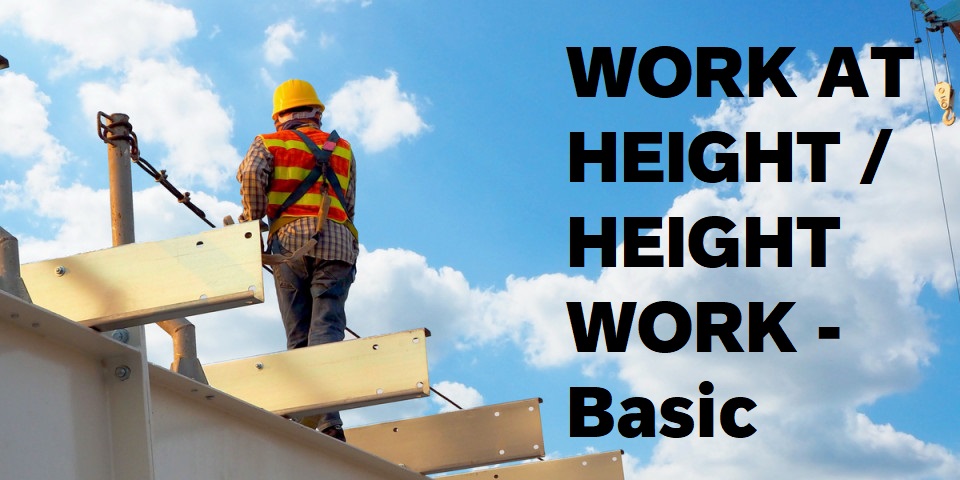
Height Work Working At Height Basic


Height Work Working At Height Basic

Height Work Working At Height Basic

Falls are the leading cause of deaths in the construction industry.

Most fatalities occur when employees fall from open--sided floors and sided floors and through floor openings.

Falls from as little as 4 to 6 feet can cause serious injuries and sometimes death.

Note: All work above 1.8 m above 1.8 m is considered as Working at Height

Hazards: Fall of Persons from Height; Fall of Material from Height; Fall of Material from Height; Poor Working platforms; Poor Working platforms; Structural Collapse.

Chain Pulley Block Safety

Precautions:

Use of height work Permit / work at height Permit to Work System (as required), Dedicated Training; Close Supervision; Provision of Fall Protection (Guard rails etc.); Provision of Personal Fall protection / arrest systems; Follow “Three Point Contact” rule while climbing ladders; Do not overload working platforms.

Falling Objects:

Objects falling from height are capable of causing considerable injury to people and causing considerable injury to people and damage to equipment.

How can we prevent this?

Housekeeping;

Good storage practices;

Cover all unprotected edges;

Carry tools in a ‘hands free’ approved tool bag;;

Do not use buckets with wire handles for lifting tools or materials;

Adequate barricades and warning signs.

Operation Safety for Lifting Appliances

The following areas require fall protection when employees are exposed to fall:

1. Unprotected Sides and Unprotected Sides and Edges;

2. Scaffolds & Scaffolds & Unsecured Platforms;

3. Walkways and Walkways and Ramps;

4. Floor Openings & Wall Floor Openings & Wall Openings;

5. Steep or Steep or Low slope roofs;

6. Excavations, Sewers, Pit;

7. Precast concrete and skeletal racks.

Ergonomic Safety – Part 1


FIRE SAFETY DEFINITIONS


FIRE SAFETY DEFINITIONS

Confined space standby man responsibilities


· Incipient Stage Fire – A fire that is in the initial stages or beginning stage and can be controlled or extinguished by a portable fire extinguisher.

· Class “A” Fire – A fire that occurs in ordinary materials such as wood, paper, rags, and rubbish. The quenching and cooling effects of water or of solutions containing large percentages of water are of first importance in extinguishing these fires.

· Class “B” Fire – A fire that occurs in the vapor-air mixture over the surface of flammable liquids such as gasoline, oil, grease, paints and thinners. The limiting of air is of primary importance. Generally, regular dry chemical, multi-purpose dry chemical, carbon dioxide, and foam may be used depending on the circumstances of the fire. Solid streams of water are likely to spread the fire, but on large fires of this class, water fog nozzles prove effective.

Crane Lifting Hand Signal Guide

· Class “C” Fire – A fire that occurs in or near electrical equipment where non-conducting extinguishing agents shall be used. Dry chemical, carbon dioxide, compressed gas, or vaporizing liquid may be used. Foam or a solid stream of water should not be used because both are good conductors and can expose the operator to a sever shock hazard.

· Class “D” Fire – A fire that occurs in combustible metals such as magnesium, titanium, zirconium, lithium, and sodium. Specialized techniques, extinguishing agents, and extinguishing equipment are needed to control and extinguish fires of this type. Normal extinguishing agents generally should not be used, as there is a danger in most cases of increasing intensity of the fire because of a chemical reaction between some extinguishing agents and the burning metal.

Abrasive Blasting Safety

· Dry Chemical – An extinguishing agent composed of very small particles of chemicals supplemented by special treatment to provide resistance to packing and moisture absorption (caking) as well as to provide proper flow capabilities. Note: Dry Chemical does not include Dry Powder.

· Dry Powder – A compound used to extinguish Class D fire. · Multi-purpose Dry Chemical – A dry chemical that is approved for use on Class A, B, and C Fires


Confined Space Physical Hazards – Part 1


Material Hoist Safety Basics


 Material Hoist Safety Basics

RESPIRATOR AWARENESS

 Do not ride on a material hoist.

 Do not operate a material hoist without prior proper training.

 Do not exceed the safe working load of a material hoist.

 Do not use a material hoist unless it has been examined and certified safe by a competent examiner.

 Do not use a material hoist unless its gates have been installed with an effective interlocking safety system.

The hoist is only operable after all the gates have been closed.

 Do not use a material hoist unless it has been repaired and maintained by a competent person. No unauthorized repair is allowed.

 Do not put loose materials into receptacles unless properly secured.

 Ensure good communication with the operator of a material hoist. All signals should be understood and followed.

FIRE PREVENTION & PROTECTION