Chain Pulley Block Safety


Chain Pulley Block Safety

Chain Pulley Block Safety

Safety Training Videos with Pictorial Guidelines

Chain Pulley Blocks are one of the general rigging appliances and it is used for short lifts such as by small monorail cranes, fixed hoists and so on.

Ensure the safe storage. Do not drop a chain block. The jolt may distort the casing causing the gearing to malfunction and the chain block to fail. The drive pinion could also part from the main driving spur wheel.

Make sure that the hook has not dipped through itself in a two part or multiple chain fall causing the load chain to twist.

Always keep chain pulley blocks away from sand, grit and dust. Some employees keep the load chain lightly oiled to create less friction. If the chain is oiled and it becomes covered in sand or grit, the grit turn out to be a grinding paste which wears the chain very quickly.

RESPIRATORY PROTECTION – Definition of Terms

Periodic inspection by the user to be done and peruse inspection before every use to be done. Color coding is one of the best practice followed in industry.

Third party inspection by the competent authority to be done as per the local government regulations.

Chain blocks with multiple falls are often very heavy on the opposite side to the block. It is a good practice to mouse the block to the head sling, to prevent the hook from dropping out of the head sling when the weight is released from the block.

 Use of Explosives & Safety Measures

Maintenance of Chain Pully Blocks

Authorized person has to inspect the brake lining material for signs of wear and have it replaced if necessary, ensuring the retaining rivets (if any) are well countersunk.

Thoroughly check the pawl for sharpness and alignment, the pawl spring for effectiveness, and the ratchet teeth for sharpness and wear.

Check the bearing bushes for wear and have them renewed if necessary.

Remove the gear case and inspect the gears for wear on the shafts, and also for bending, breakage, wear, and misalignment of teeth.

Check the load chain for wear and for stretch and the load sheaves for excessive wear. If the load chain does not fit accurately it should be replaced before using the block.

Workplace Risk Assessment: A Key Step in Improving Safety

Inspect the load chain guide for movement. This guide should be the fixed type not a small roller. The purpose of the guide is to guide the load chain, free of turns, on to the gypsy. If a roller guide is fitted, hang the block up and while lowering the empty hook, gently twist the ascending chain as it approaches the guide roller. If it jams, a new guide must be fitted.

Check the hooks for opening out due to overloading or misuse. Examine the hook yokes, ball bearing swivels and anchorages of chain to clevis pins.

Where a chain block needs major overhaul or repair, advice should be sought from the supplier about the work to be carried out, and should be done by people who are competent.

Chain blocks must be lubricated lightly. If too much grease is pumped into a chain block the grease could cover the brake and the chain block would fail.

Do not leave a chain block soaking in oil. The oil will saturate the brake.

Hearing Protection Safety Why It Matters


Confined Space Physical Hazards – Part 2


Confined Space Physical Hazards – Part 2

Confined Space Physical Hazards

Hot Work Safety - A Complete Guide to Safe Practices

Electrical Hazards

The electrical power supply used in the confined space normally is 24v. Electrical safety applies the same outside or inside a confined space. Working with electric tools or on energized circuits can be especially hazardous; both can be ignition sources and need a hot work permit. Controlling electrical circuits require LOTO procedures. Dampness can create other electrical hazards. The path of electrical cords and location of connections must be planned to minimize tripping hazards.

Mechanical Hazards

Agitators, stirrers, unguarded chains, pulleys, rotating blades, belts, fans, or other moving and rotating parts are all mechanical hazards. LOTO procedures will apply. Because of limited space, you must be extremely careful to avoid points of contact and wear appropriate Personal Protective Equipment(PPE).

Ensuring Safety at Heights in Industry 

Noise Hazard

Noise can disrupt communication and increase stress levels in workers and is usually worse in a confined space. Noise is generally controlled with PPE and proper planning, but this can make communication difficult in the space and with standby personnel.

Slips, Trips and Falls

Confined spaces may have sludge, oil or water. Slip hazards should be controlled by initial entry for cleaning or remote cleaning (outside the space). Spaces with ladder access introduce ladder safety issues. Wear shoes or boots with slip-resistant soles and consider utilizing harnesses or lifelines.

Managing Heat Stress in the Workplace : A Complete Guide 

Poor Lighting

Confined spaces often have poor lighting. Temporary, job-specific lighting can introduce electrical hazards and can be an ignition source. Natural light where possible is preferred. Lights that are sealed against flammable and explosive atmospheres may be required. The light fittings to be explosion proof.

Atmospheric Hazards

All confined spaces must be gas tested for flammable, toxic (H2S, CO), and explosive gases as well as adequate oxygen (deficiency less than 20% or enrichment above 23.5%) by the authorized gas tester. This applies especially when hydrocarbon process equipment must be entered for cleaning or service. Bring in and circulate fresh air in confined spaces to make them safe. Self Contained Breathing Apparatus(SCBA)/SABA is often required.

Hot Work Safety - A Complete Guide to Safe Practices 


Confined Space Physical Hazards – Part 1


Confined Space Physical Hazards – Part 1

Chain Pulley Block Safety

The Industrial workplace hazards outside of a confined space can be also inside the space, and often more severe (e.g. noise, grinding). Whenever possible, entry into confined spaces should be avoided or greatly limited. All employees involved in a confined space job must be trained on confined space hazards and hazard control. The most common hazards include:

❏ engulfment

❏ temperature extremes

❏ electrical

❏ mechanical

❏ noise

❏ slips, trips and falls

❏ poor lighting

❏ atmospheric

Crane Lifting Hand Signal Guide

❏ confined space configuration

❏ external activities

❏ confined space atmosphere

❏ flammable atmosphere

❏ toxic atmosphere

❏ radioactive materials

❏ mercury

❏ other toxic materials

Engulfment Hazard

Engulfment is one of the critical hazard in the industry workplace,  Engulfment means to bury or submerge. Engulfment is when a person is buried or trapped by soil, sand, or gravel; or submerged by a liquid or chemical. Solid materials can be very heavy on the body and can cause injury or death by crushing or suffocating. Liquids can cause drowning or injuries from the liquid or chemical. All of these are engulfment. An excavation can have engulfment hazards from loose sand and seeping water such as when trenches or excavations cave-in or collapse.

 Definitions of Terms in Chemical Safety

Extreme Temperature Hazard

Adequate ventilation is very important safety requirement for the safe working in Confined Space. A confined space with limited ventilation can become extremely hot or cold. In extremely hot environments, the hazards are heat exhaustion, heat cramps, or heat stroke. In extreme cold you can lose feeling in your fingers, toes, and the ability to think clearly. Protective insulated clothing and PPE for both hot and cold environments adds additional bulk and fatigue to a working members. Insulated clothing and Personal Protective Equipment(PPE) must be considered to ensure workers can move within the confined space, to operate equipment, and exit the space quickly.


Process Safety Incidents - Case Studies


Abrasive Blasting Safety


Abrasive Blasting Safety

Abrasive Blasting Safety

Ensuring Safety at Heights in Industry

Abrasive blasting is one of the high risk activities because various HSE Hazards, the following information’s and controls will help you mitigate the risks.

Hazards

Ø  Abrasive blasting work creates very high levels of dust.

Ø  The dust may contain respirable crystalline silica (RCS).

Ø  Breathing this dust can cause serious lung diseases like silicosis, chronic obstructive pulmonary disease (COPD) and even lung cancer.

Ø  These diseases cause everlasting disability and early death.

Ø  The substance being worked on may contain other hazardous substances, eg lead.

Ø  Skin contact with dusts and prolonged or frequent contact with water may cause dermatitis.

Ø  A good standard of control is needed because the risk to health is high.

 The Importance of Electrical Safety in Industry

Respiratory Protective Equipment (RPE)

ü  Provide the shot blaster with an air-fed ‘CE’ marked abrasive blasting helmet with a Standard Assigned Protection Factor (APF) of at least 40.

ü  Air supplied to the blasting helmet should be breathing quality.

ü  Position airlines so that they are not liable to be blocked or damaged by moving vehicles etc.

ü  Change blasting helmet visors as soon as pitting or frosting occurs.

ü  Provide Respiratory Protective Equipment (RPE) with an APF of at least 20 for the ‘kettle man’ working nearby.

ü  Fit testing is ensured for Respiratory Protective Equipment (RPE) with a tight fitting face seal.

ü  Employees wearing tight fitting Respiratory Protective Equipment (RPE) should be clean shaven, fully trained in detailed as how to fit it properly and how to look after it.

    Inform employees to discard disposable Respiratory Protective Equipment (RPE) at the end of the shift, or sooner if their RPE becomes blocked with dust.

Chemicals Hazards, Storage & Protection

ü  Have a track and Change the filters on respirators in accordance with manufacturers’ recommendations and if:

v  the shelf-life expiry date has passed;

v  they are damaged or visibly contaminated; or

v  they become harder to breathe through.

ü  Inspect and test non-disposable Respiratory Protective Equipment (RPE) and air supply thoroughly at least once every month.

ü  Inform Employees to check RPE is working properly before every use.

ü  If the RPE worn by the kettle man is required for extended periods, eg longer than 1 hour continuously, use powered respirators.

ü  Always Keep RPE clean and store it in a clean place.

Safety Training Videos with Pictorial Guidelines

Personal Protective Equipment (PPE)

Ø  Employees to wear blasting suits/coveralls that do not retain dust and protect against water.

Ø  Provide protective gloves and footwear to the employees.

Ø  Provide the storage facility to employee for PPE to prevent damage or contamination when not in use.

Ø  Inform employees Keep any PPE cleaned and replace at recommended intervals.

Ø  Engage contract laundry or a suitable equivalent to wash work clothing. Don’t allow employees to do this at home.


Steam Hazards and Safety Requirements


Crane Lifting Hand Signal Guide


Crane Lifting Hand Signal Guide

CONTROL OF HAZARDOUS ENERGY SOURCES

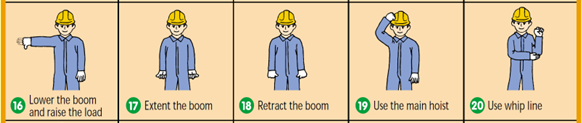
• The "slinger" is responsible for attaching and detaching the load to and from the crane.

He shall:

– have received appropriate training on general safe lifting operations;

– be capable of selectings lifting gears suitable for the loads;

– liaise with the operator and direct the movement of the crane safely.

 Ensuring Safety at Heights in Industry

• The "signaler" is responsible for relaying the signal from the slinger to the crane operator.

He shall:

– have received appropriate training on general safe lifting operations;

– be able to direct the movement of the crane and loads.


Construction Safety Pictorial Guidelines


Ensuring Safety at Heights in Industry


Safeguarding Your Construction Site: A Practical Guide